


BATSHIT: The Madness of Being a Woman Who Dares to Feel
- The Silver Moth

- Jun 29, 2025
- 3 min read
Updated: Jun 30, 2025
Hysterical. Hormonal. Deluded. Irrational.
These aren’t medical terms. They’re cultural kill switches. Tools of control dressed up as concern. And for centuries, they’ve been used to erase women from the world—one “outburst” at a time.
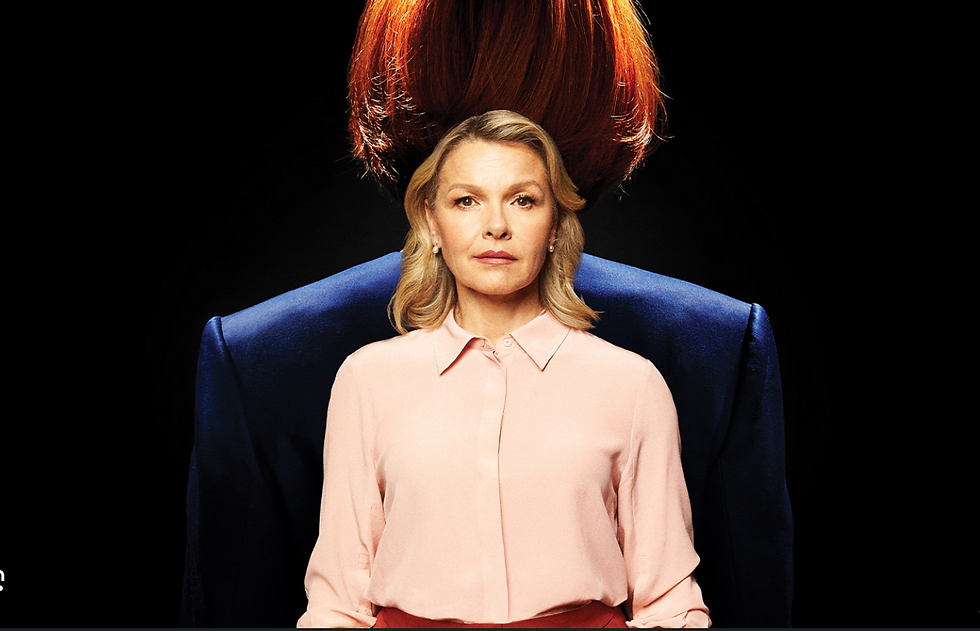
I recently went to see BATSHIT at the Arts Centre in Melbourne. One woman. One stage. One brutal excavation of what it means to be a woman in a world that thinks your feelings are a disease. Created and performed by Leah Shelton and directed by the Olivier award-winning Ursula Martinez, this wasn’t just a show. It was a séance for the silenced. A riot in soft lighting.
The stage was stark—a living room bleeding into an institution, surrounded by mirrors and domestic debris. It was familiar, suffocating. And the lighting? It didn’t just illuminate—it interrogated. Harsh fluorescents that mimicked psych wards. Sudden darkness to swallow the audience whole. Strobe flashes that felt like memory shrapnel. And in the middle of it all: Leah. Dressed like every woman who has ever been called too much. Holding the weight of inherited madness and making it dance, bleed, scream, and laugh.
Her performance was immersive, grotesquely funny, and terrifyingly true. She invited the audience in and dared them to squirm. She wielded humour like a scalpel, carving into the myths of female insanity that psychiatry has spoon-fed us for generations. Electric shock treatment. Hysterectomy as cure. Compliance as health. And the price of simply wanting more than motherhood or martyrdom.
BATSHIT is a love letter to Gwen—Leah’s grandmother—locked away in 1960s Australia for the crime of being not happy enough within her life and family. It’s a middle finger to the system that called her broken for daring to resist the script. And it’s a mirror held up to us, now, asking: has anything really changed?
Spoiler: not enough.
After the show, I had a drink with a woman I met at the show. She said she’d thought things had moved forward. That we were freer. That we were done with that kind of cruelty. But BATSHIT made her realise the past isn’t past—it’s just wearing a new coat.
She told me about her ex-husband, about gaslighting, about her son who couldn’t stomach the part where a woman chose the bear over a man Her daughter tried to explain the reasoning but he refused to accept it. The cycle continues from one generation to the next. That’s what good art does. It tears the seams open. It makes the silence scream.
There was a moment—violent, absurd, unforgettable—when a television was smashed with an axe. It triggered the entire play. The audience laughed, then paused. But I saw it clearly. The TV wasn’t a prop. It was a symbol of sedation. A flickering cage. And the axe? That was the antidote. The rebellion. The refusal to be programmed into passivity.
When I left the theatre, I bought the shirt. It said: BRING ME THE AXE.

wear it with pride. I wear it at the gym while lifting weights. Because I’ve felt that rage. Because I was that little girl who knew something was wrong, even if no one ever said it out loud. Because now, as a woman, I’ve learned that survival means refusing to go quietly.
To the friend who once asked if I regretted studying behaviour—No. I don’t. I’d rather be aware. Angry. Awake. Than a hollowed-out version of myself, trimmed down to make others comfortable.
BATSHIT is for every woman who’s ever been institutionalised—officially or quietly. For every woman who’s been told to calm down, smile more, be less. And for every woman who knows, deep down, that she is not broken.
She is just waking up.



Comments